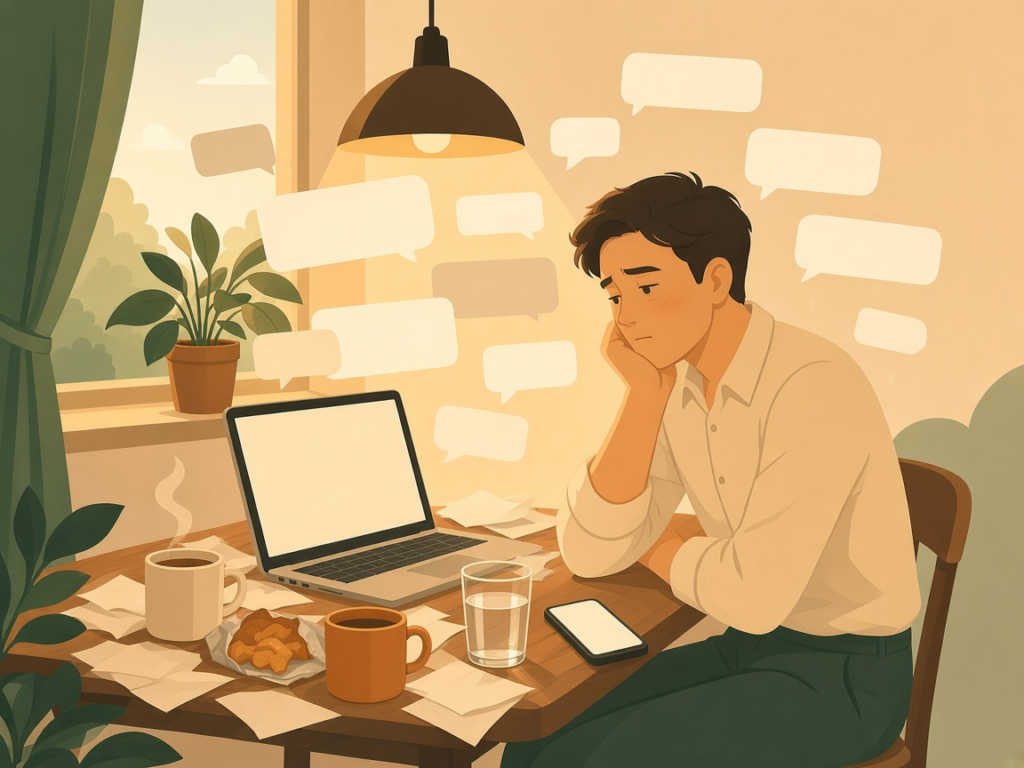
You’re writing an email. Then a chat pings. Then you open a new tab to “quickly check” something. Then your phone lights up. Twenty minutes later, the email is still half-written, you have 14 tabs open, and you feel strangely tired, even though you haven’t finished a single thing.
Sound familiar? We’ve all been there.
Here’s the thing: the exhaustion often isn’t from the work itself. It’s from the switching. Every hop between tabs, apps and chats costs a little focus, and those little costs add up.
Today’s habit costs nothing, needs no app, and takes one hour. Close everything except the one thing you’re doing. Put your phone in another room. Do just that.
The Hidden Cost of “Just Checking”
This isn’t just you. Researchers have been measuring how long we actually stay with one thing on a screen, and the answer is: not long.
Gloria Mark, a professor at the University of California, Irvine, has been studying this for more than 20 years. In 2004, people lasted about two and a half minutes on a single screen before switching. By around 2020, that average was down to 47 seconds. And when something pulls you away, getting back isn’t instant. Her research has found that recovering from an interruption can take almost half an hour, and you often do a couple of other things first.
Psychologist Sophie Leroy has a name for the leftover sticky-ness in your head: attention residue. When you switch from one task to another, part of your attention stays stuck on the first one, especially if you didn’t finish it. So you’re never fully on the new thing. You’re half here, half back there, and both suffer.
The American Psychological Association has also summed up experiments on task switching. People lose time every time they change tasks, and they lose more of it when the work is complex or unfamiliar. Each pause may only be a moment. Do it all day, and the moments pile up.
Every switch is a small tax on your focus. Pay it often enough, and you feel more drained than the work itself should have made you.
It Feels Productive. It Isn’t.
We tell ourselves we’re good at multitasking. It feels efficient: look how many things we’re touching at once.
We’re not really doing two things at once, though. We’re bouncing, and every bounce has a restart fee. The half-written email has to be reread. The shopping tab you opened “for later” is still sitting there, quietly tempting you. By the afternoon, you’ve been busy for hours and finished almost nothing. (Ouch. Too real?)
Busyness is not the same as progress. You don’t need a new productivity system to fix it. You need less switching.
Your Single-Tab Hour
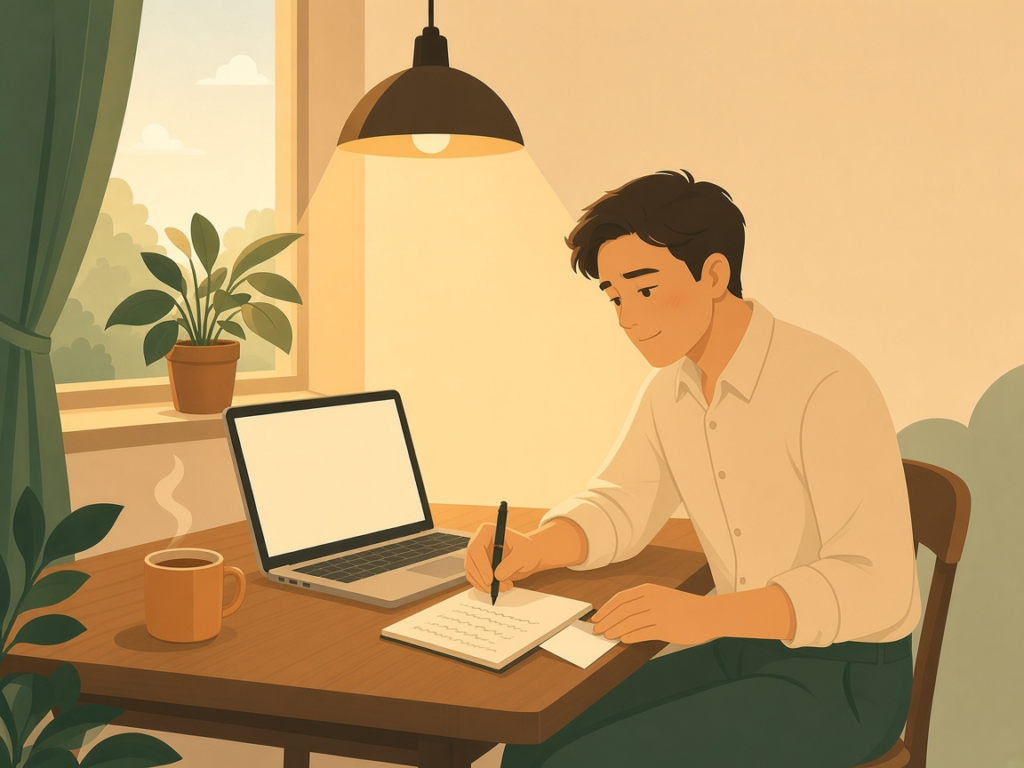
The fix is almost suspiciously simple. Pick one hour. Pick one task. Close everything else. No special app, no paid “focus” subscription. Just one tab, a timer, and a notepad.
1. Choose the one thing
Pick work that actually needs your brain: writing, planning, a hard problem, a conversation you’ve been putting off. Inbox-clearing is a poor choice for this hour, because every message is an invitation to switch again. If you’re not sure, ask: what would I be proud to have finished by the end of this hour?
2. One tab, one window
Close the extras. If you need a second page, open it, use it, close it. Quit the chat app, the email, the news, the social feeds. They’ll still be there in 60 minutes. (I promise the internet can survive without you.) If you truly have to stay reachable, set a status and check once when the timer ends, not every time it blinks.
3. Phone in another room
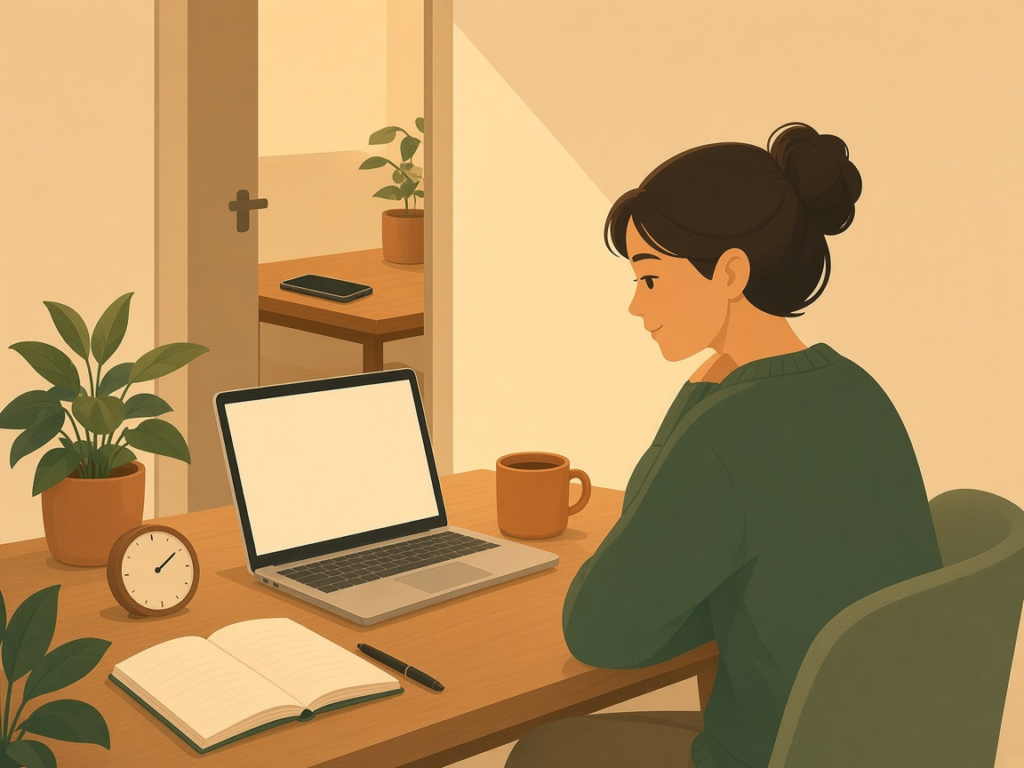
Not face-down on the desk. Not “on silent, but right here.” Another room. Out of reach, out of sight. If you need the alarm, use a kitchen timer or the clock on your laptop instead.
This is the same simple move we talked about in Preoccupied!, only this time it’s not about being present with other people. It’s about being present with your own work.
4. Set a timer
A kitchen timer is perfect. The clock on your laptop is fine too. When it rings, you’re done. Until then, you stay. The timer does the deciding, so you don’t have to keep asking, “Have I focused enough yet?”
5. A notepad for stray thoughts
Your brain will offer you other tasks, and it will be very convincing. Just reply to that message. Just look up that one thing. Just check the sale. Don’t open a tab. Write the thought down: “email Sam,” “check that price,” “buy oat milk.” Then return to the one thing. The thought is safe. It can wait.
When You Slip
You will slip. A notification will sneak through. You’ll “just check” something and look up 12 minutes later, slightly confused about how you got there. That’s not failure. That’s being a person with a phone, in 2026.
When it happens, keep it small. Notice it, without the lecture. Close the extra tab, or put the phone back in the other room. Jot down whatever pulled you away, and come back to the one task. Don’t restart the whole hour in shame, and don’t throw out the rest of the day.
If something genuinely urgent appears, deal with it, then start a shorter block. Twenty good minutes still count. It’s not about perfection, it’s about progress.
What This Has to Do With Wellth
This is not a hustle-culture productivity hack. I’m not asking you to squeeze more into the day. I’m asking you to do one thing at a time, so the day feels a little lighter. That’s a wellth habit, and it touches all three pillars.

Health. Constant switching is stressful. Your brain is warming up, tearing down, and warming up again, all morning. An hour of single-tasking is a chance to settle. You finish something, your shoulders drop, and you have a little more energy left for the rest of your life.
Habits. Deep focus is a muscle. One protected hour a day compounds, the same way the other small habits on this blog do. The ROI starts the first time you actually finish the thing you sat down to do.
Smart Money Moves. Distracted clicks turn into impulse buys. A “quick check” of a shopping tab, a flash sale, a “you left something in your cart” email, and suddenly you’ve spent $40 you didn’t plan to. The Single-Tab Hour closes those doors for a while. It’s a cousin of the 24-hour rule from our stress spending post, and it sits nicely next to the mental declutter of the Subscription Sweep. Fewer tabs, fewer temptations, fewer “wait, why did I buy that?” evenings.
And it’s minimalist in the best, simplest way. Not a new system. Not a new app. One task. One tab. One hour. Keep things simple, and you get your attention back.
Your 7-Day Single-Tab Challenge
Ready, Wellthers? Start smaller than you think, and build up.
Day 1: Twenty minutes. One task, phone in another room, notepad ready.
Day 2: Twenty minutes again. This time, notice what tried to pull you away, and write it down.
Day 3: Thirty minutes. Same rules.
Day 4: Thirty minutes at a different time of day, if you can. Mornings aren’t magic for everyone.
Day 5: Forty-five minutes. If that’s a stretch, two blocks of 20-plus are fine.
Day 6: Forty-five minutes again. If you slipped yesterday, no drama. Just start the timer.
Day 7: A full hour. When it ends, write down what you finished, and how you felt. Keep the setup that helped.
That’s it. Seven days, a timer, and one tab.
One Thing Is Enough
You don’t need to become a monk. You don’t need a cabin in the woods or a weekend digital detox. You need one protected hour, and the rest of the day can still be messy.
Some days the hour will feel easy. Some days 20 minutes will be a win. Both count. Your future self, the one who finishes things and goes to bed a little less tired, will thank you.
So close the extra tabs, put your phone in the other room, and ask yourself: what would I finish if I only did one thing?