
The package arrives on a Wednesday. Thursday, a sale-rack shirt comes home with you. Saturday, a cute mug, because it was only $6. None of these feels like a problem.
Then one Tuesday you open a cupboard and a plastic container makes a break for it. Your closet has a “maybe” pile that’s been maybe for two years. The junk drawer no longer closes. Sound familiar?
Here’s the thing: you didn’t decide to have a cluttered home. You just said yes, one good deal at a time, and never asked anything to leave.
Today’s habit fixes that, and it needs no weekend purge, no fancy organizer, and no “minimalist aesthetic.” Just one rule: every time something new comes in, one similar thing goes out.
Clutter Doesn’t Show Up All at Once
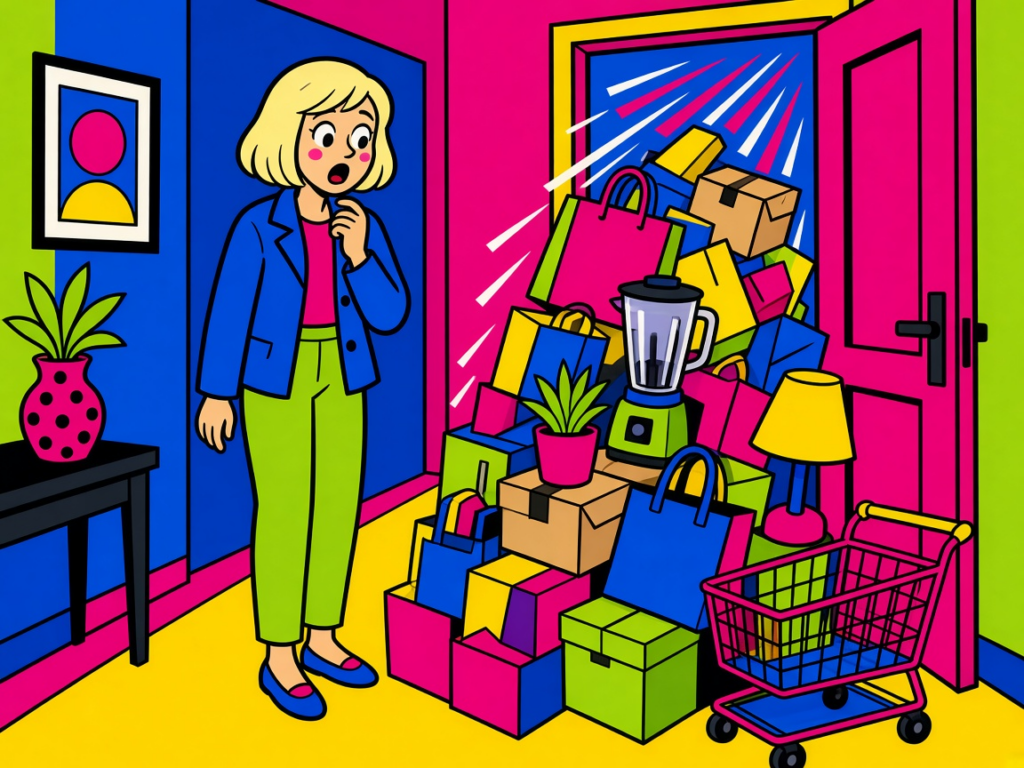
Clutter is a drip, not a flood. A shirt here, a gadget there, a free tote from a conference you barely remember. Each arrival is easy to justify. It’s only when you look at the whole room that you realize the math has been running against you for months.
Researchers have been telling us this for a while. In a study of dual-income families, psychologists Darby Saxbe and Rena Repetti found that women who described their homes as more cluttered or unfinished had a more stressful evening pattern of the hormone cortisol, and a worse mood as the day went on. Your stuff isn’t just sitting there. It’s quietly taxing you.
Welcome to the slow leak, my fellow Wellthers.
The One-In, One-Out Rule
The rule is almost embarrassingly simple. When a new thing comes in, a similar thing goes out the same day. New shirt? One shirt leaves. New mug? An old mug is donated, sold, or recycled. New gadget? The one it replaces — or the one you never use — goes.
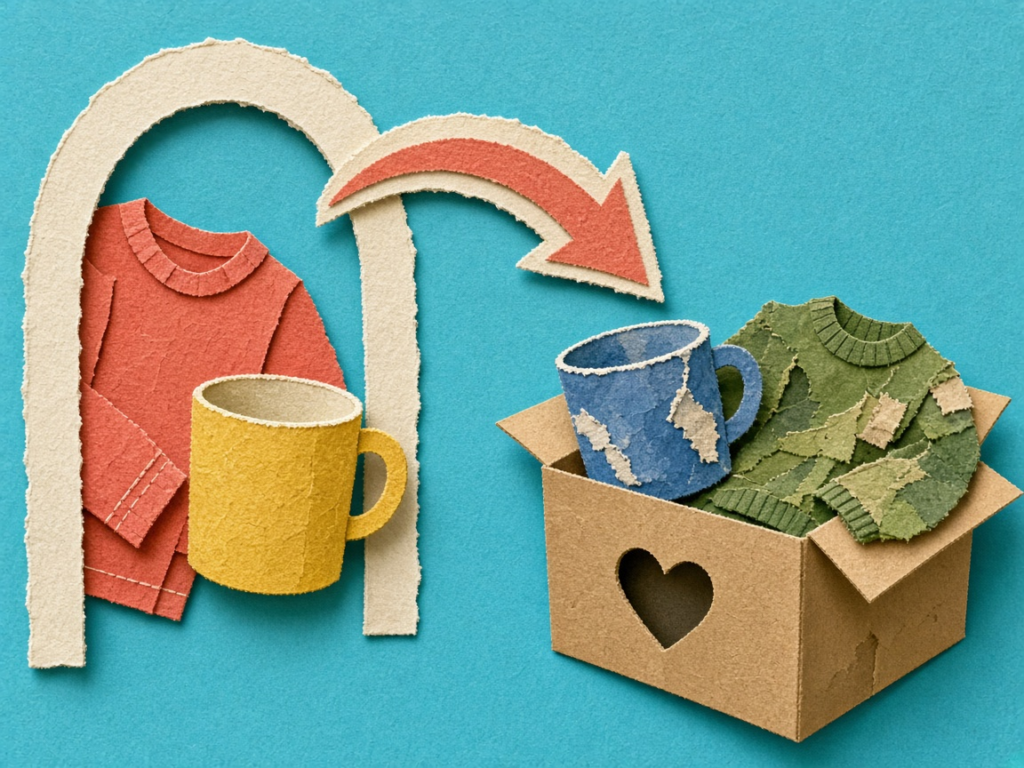
That’s it.
You’re not aiming for an empty house. You’re aiming for a house that stops filling up. The “out” can be a donation bag, a sell pile, a recycle bin, or a hook by the door for things you’ll give to a friend. What matters is that the leaving actually happens.
If you’ve already done a big clear-out, this is how you keep the win. One-in, one-out is maintenance, not a project.
Start With Your Closet
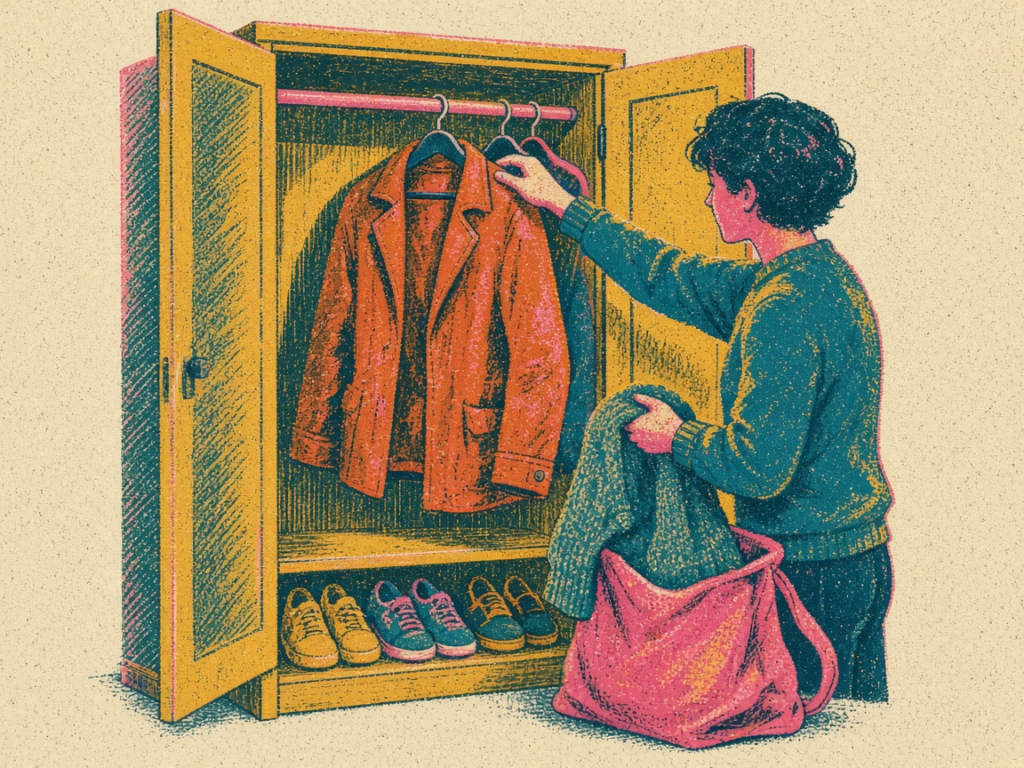
Clothes are the easiest place to practice, because the swap is obvious: new item in, old item out, same category.
- Same type, same day: A new sweater means an old sweater leaves, not a pair of socks you were happy to lose anyway. Be honest.
- The “maybe” counts as in: If it has lived on the maybe pile for a season, it already had its chance. Let it go when the new one arrives.
- Gifts and sale racks still count: A bargain is still an arrival. If you wouldn’t evict something to make room for it, maybe it doesn’t come home at all.
This isn’t another capsule-wardrobe project. We already walked through that in From Closet Chaos to Meal Prep Magic. This is the habit that keeps a cleared closet clear, so you don’t have to do the great purge twice.
Then the Kitchen, and Your Digital Stuff
The kitchen is where “but I might need it” loves to hide. The extra mug. The third vegetable peeler. The specialty appliance you used twice.
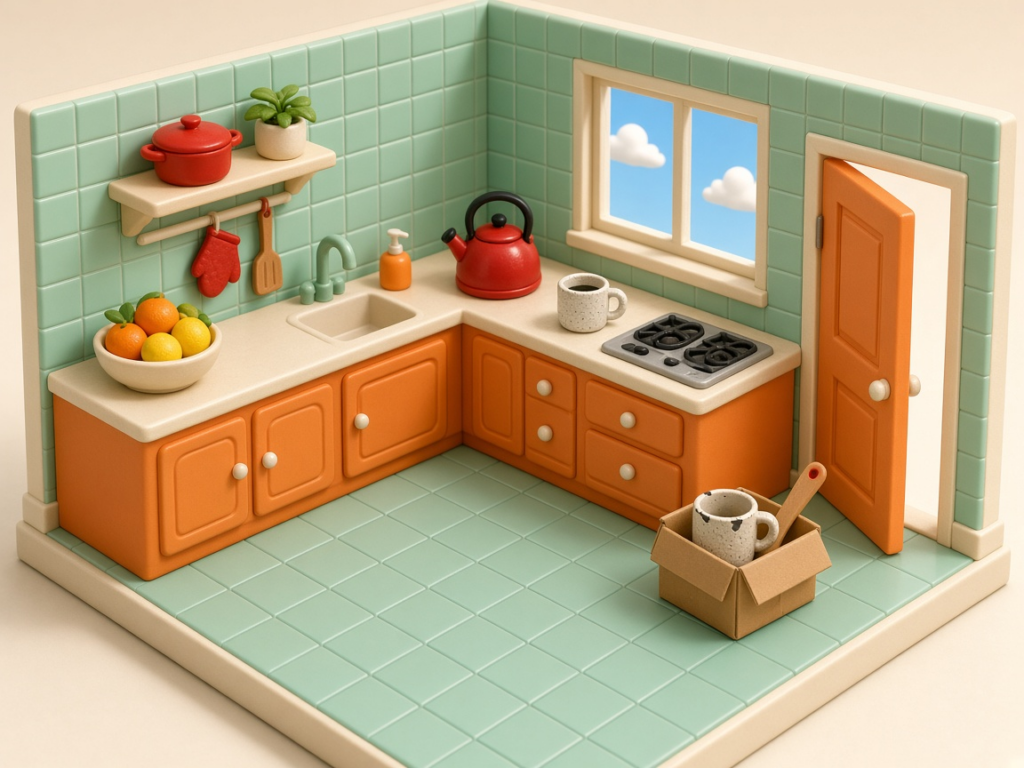
- Mugs, glasses, utensils: Pick a number that actually fits the shelf. When a new one comes in, the one you like least goes out.
- Gadgets and single-use tools: If the new one does the job better, the old one leaves the same day. If you’re not sure it will, don’t bring it home.
- Food storage and “free” extras: Conference totes, promotional tins, the tenth jam jar. Free still takes up space.
Then look at the stuff that doesn’t take up a shelf, but still takes up a life.
- Apps: New app, old app deleted. Your home screen is a room too.
- Subscriptions and memberships: A new streaming service means an old one gets cancelled. If you’ve already done The Subscription Sweep, this is how you keep it swept.
- Files and photos: A new folder, an old one archived. A new screenshot habit, an old camera-roll cull. Digital clutter drips in even faster than mugs.
The Pause Before You Buy

Here’s the quiet money move, and it’s my favorite part of the rule.
Before you buy the thing, name the thing that will leave. Out loud, if you can. “If this shirt comes home, the blue one goes to the donation bag.”
That tiny pause does two jobs. First, it makes the cost real — not just the $24, but the space, the decision, and the old thing you actually still like. Second, it catches impulse buys in the doorway. A lot of “good deals” stop looking like deals when they have to evict something.
If naming the outgoing item feels hard, that’s useful information. You probably don’t want the new thing as much as the display wanted you to.
This pairs nicely with the 24-hour rule from our stress spending post. Pause, name the outgoing item, and if you still want it tomorrow, bring it home and let the other thing go.
(Yes, replacements for something broken are allowed. The broken thing is the “out.” You don’t have to donate a cracked mug to make room for a whole one.)
What This Has to Do With Wellth
A lighter home is not a personality. It’s a way of protecting the three things this site is actually about.
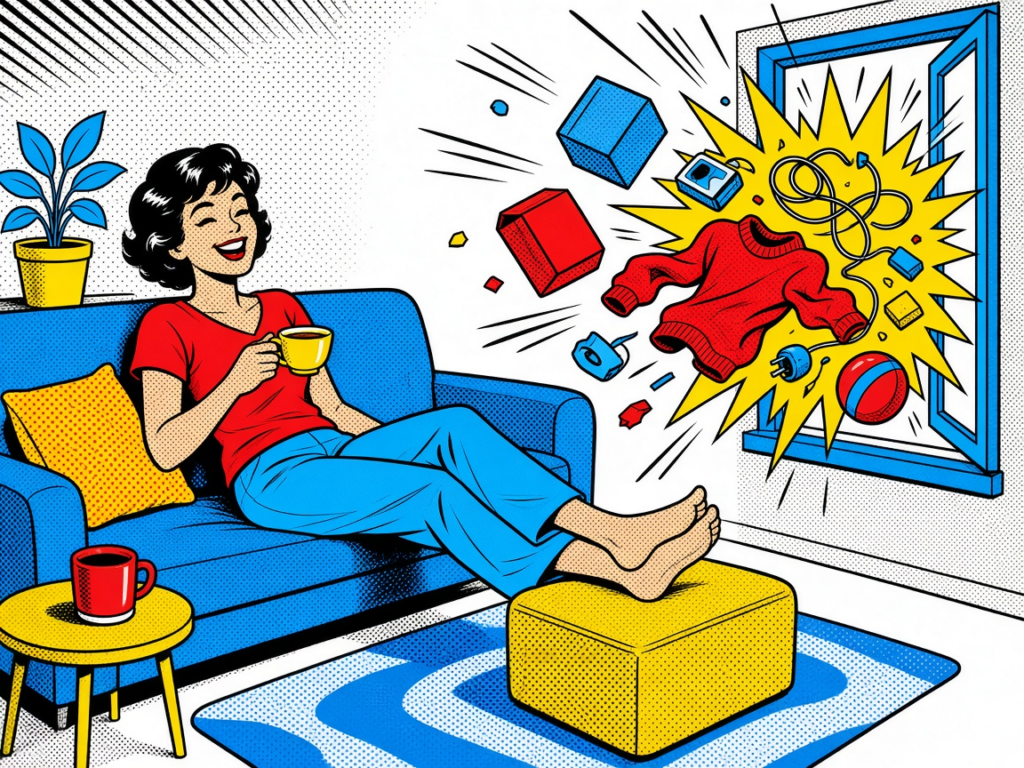
Health. Less visual noise means a calmer nervous system. A Princeton team found that when your visual field is crowded, objects compete for attention and it gets harder to focus. That’s a reason to come home to a space that doesn’t raise your stress before you’ve even taken your shoes off.
Habits. One-in, one-out is a tiny daily vote. You don’t need a decluttering weekend if the leak is sealed. Small, consistent choices compound here the same way they do with money and movement.
Smart Money Moves. When every arrival needs an exit, you buy less, and you buy more on purpose. The money you don’t spend on the fourth mug is money that can sit quietly, or go toward something you actually want. It’s financial aikido: you use the urge to acquire to make a better decision, instead of fighting it with a budget spreadsheet.
A home that stays light gives you back time, attention, and a little cash. That’s wellth, hiding in a donation bag.
Your 30-Day One-In, One-Out Challenge
Ready, Wellthers? Thirty days of tracking every arrival and its exit. No big purge required. You’re just catching the drip.
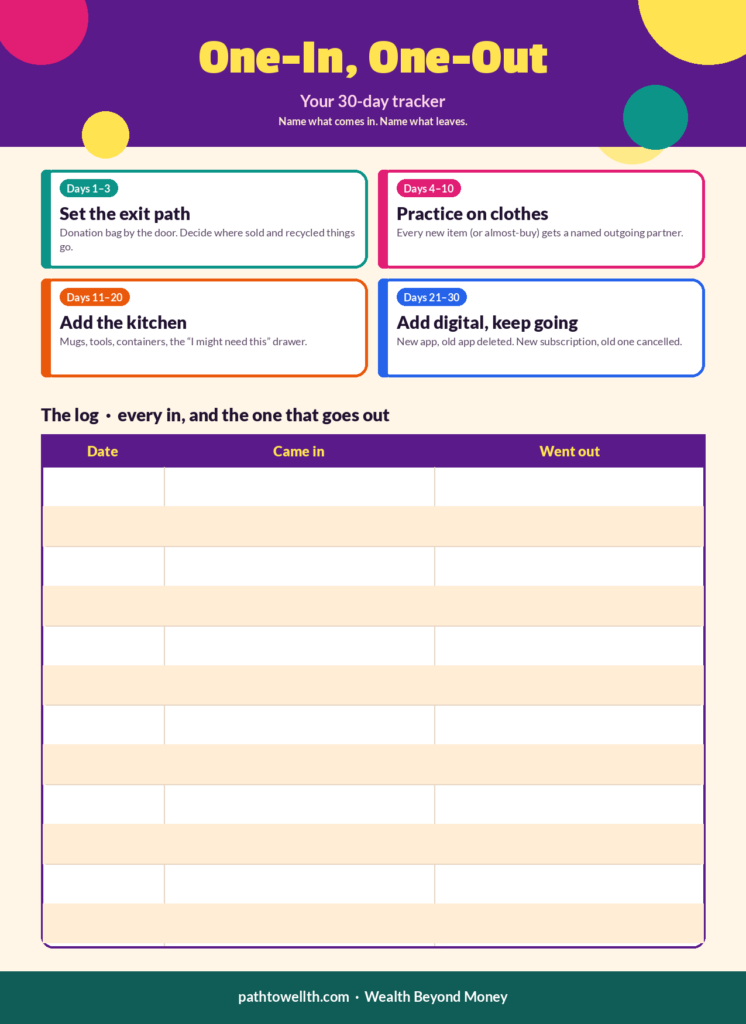
Days 1-3, Set the exit path: Put a donation bag or box by the door (or in the closet). Decide where sold items will be listed, and where recycling goes. If the “out” has a home, you’ll actually do it.
Days 4-10, Practice on clothes: Every new clothing item, or any clothing you almost buy, gets a named outgoing partner. Track both.
Days 11-20, Add the kitchen: Mugs, tools, containers, the “I might need this” drawer. Same rule.
Days 21-30, Add digital, and keep going: One new app, one deleted. One new subscription, one cancelled. Keep logging every in and its out.
At the end of the month, look at the list. You’ll see two columns: what came in, and what left. The second column is the real win. Some weeks the win will be that almost nothing came in at all. That’s a win too.
Your One-In, One-Out Tracker
Save it, print it, or stick it on the fridge next to the donation bag.
A Home That Stays Light
You don’t need to become a minimalist, buy a label maker, or spend a Saturday on the floor with three piles. You need one rule, used in the moment something new wants to come in.
Some days you’ll forget. Some days a gift will land and you’ll do the “out” the next morning. Both are fine. It’s not about perfection, it’s about a home that stops quietly filling up. Your future self will thank you.
So the next time a “good deal” winks at you, pause and ask: what leaves if this comes home? And if the answer is “nothing I can spare,” maybe the deal wasn’t that good after all.