It’s 3 p.m. Your neck has set like concrete, your hips feel rented to the chair, and “I’ll go to the gym later” is already a polite fiction.
Sound familiar? Here’s the thing: you don’t need a membership, a mat, or a free hour. You need two minutes, a few times a day, in the clothes you’re already wearing.
Today’s habit is a short stretch break, tied to things you already do: after a call, while the kettle boils, before you open a new tab. I call it the Two-Minute Stretch Break.
The Desk Hunch Is a Habit, Not a Personality
Hours of sitting — or slumping on the couch — quietly teach the body a shape: head forward, shoulders rounded, hips parked. It’s not a moral failing. It’s just time in one position, without a pause.
We’ve all been there. You stand up and everything complains at once. Then you sit back down, because the real fix is “later,” and later is a gym you’re not going to reach today.
This isn’t a workout plan, and it isn’t a substitute for one. If you want a fuller bodyweight routine you can do on the road, that’s in Fitness Anywhere. If you’d rather collect movement on short trips, that’s Walk It Off. Today’s job is smaller: loosen a little of the hunch while you’re still in the workday.
Two Minutes Is Enough
The shift is almost embarrassingly small. Stand up. Move through five gentle stretches. Sit down a little looser than you were.
Short, active breaks have been studied in offices. A 2022 review of what researchers call “microbreaks” found that a couple of minutes of light movement, taken often, may help office workers feel better physically and mentally, without getting in the way of the work. In a 2020 experiment, standing up and stretching eased the discomfort of long sitting more than staying in the chair and “resting.” That’s not a miracle. It’s a nudge toward what your body already wants: a change of position.
You don’t need to set a timer every half hour. A few times a day is a solid start. Two minutes is short enough that you’ll actually do it.
This isn’t medical advice, and it isn’t a treatment for pain. If something hurts — sharp, shooting, or just not right — stop. If neck, back, or joint pain is ongoing, or you’ve had an injury, talk to a doctor or a qualified professional before you start.
Your Five-Move Stretch Break
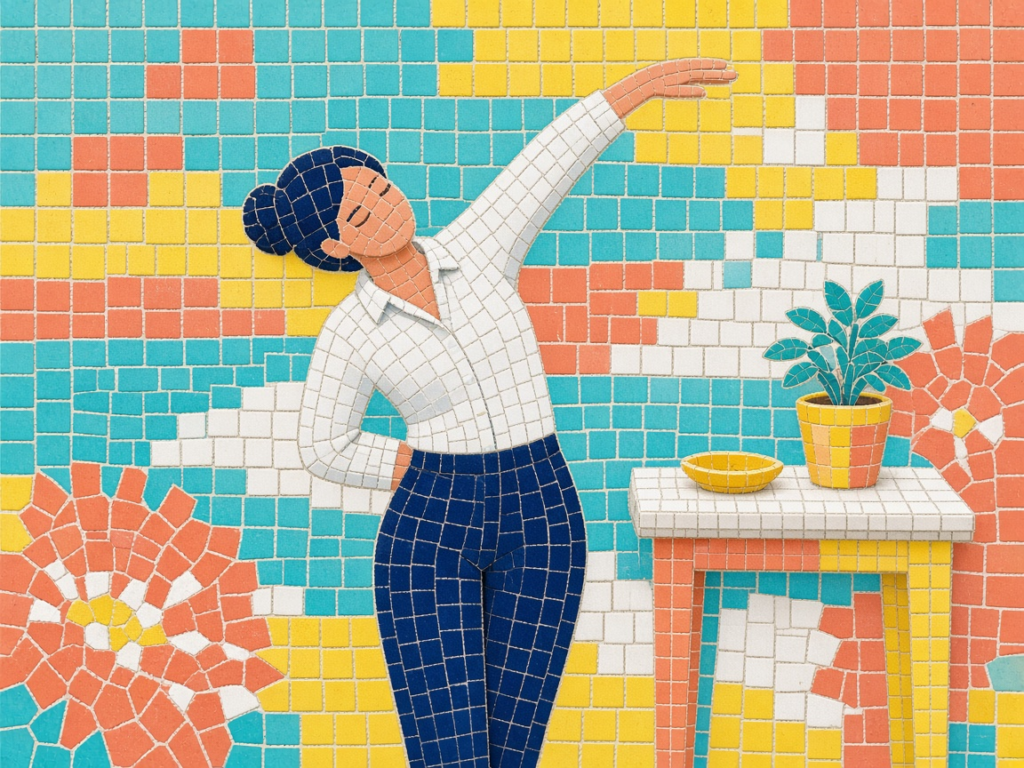
All five are standing, in ordinary office clothes, no mat and no special shoes. Move slowly. Breathe. A stretch should feel like a gentle pull, not a winch. Don’t bounce, and don’t turn anything into a competition.
1. Neck side-bend
Stand tall. Let your right ear drop toward your right shoulder, and keep the left shoulder heavy, not hiked. Stay for two or three easy breaths, then switch. You can also turn your head gently to look over one shoulder, then the other. Skip the big head rolls, and don’t tip the head all the way back.
2. Chest opener
Clasp your hands behind your back, or hold the opposite wrist if a clasp is too much. Lift the chest a little, and draw the shoulders down and back. Look forward, not at the ceiling. Two or three breaths is enough.
3. Desk cat-cow
Put your hands on the desk and step back half a pace, knees soft. Round the upper back and look toward your navel, then slowly open the chest and look a little forward — not craned up. Repeat four or five times, unhurried. This is the one that loosens the “I’ve been typing” shape.
4. Standing hip flexor
Step one foot back, both feet pointing forward. The back heel can lift. Tuck the tailbone slightly so you feel a gentle stretch in the front of the back hip, not a pinch in the lower back. Hold a few breaths, then switch sides. Keep a hand on the chair if you want the balance.
5. Standing side stretch
Feet under your hips, reach one arm up, and lean a little to the opposite side. Keep both feet on the floor, and don’t collapse into the waist. A few breaths, then switch.
That’s it. The first time, it may take a little over two minutes while you remember the shapes. After that, it fits in a kettle boil.
Tie It to Something You Already Do
A two-minute habit only survives if you don’t have to remember it from scratch. Skip the nagging app. Borrow a cue you already have.
- After a call: when you hang up, stand up before you type the next thing.
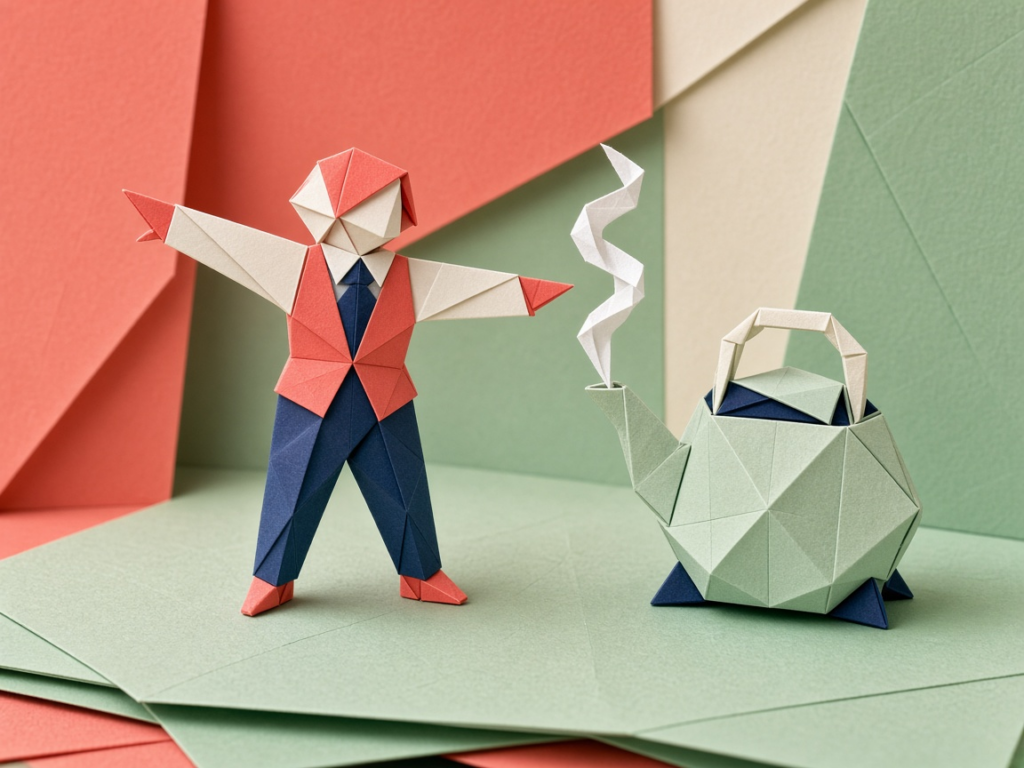
- While the kettle boils: the stretch is done before the tea is.
- Before you open a new tab: one break, then start the next piece of work. It pairs nicely with the Single-Tab Hour — a body reset at the edge of a focus block.
- When you refill a glass: the walk to the tap can end in two minutes on your feet.
A small physical reminder helps: a sticky note on the monitor, a hair tie on the kettle, a mark on the calendar. The point is a cue you can see, not another notification you’ll dismiss.
A Busy Workday Still Has Room
You don’t need a gap in the calendar called “mobility.” You need the leftover seconds that already exist.
Do it at the desk. You don’t change clothes, you don’t book a room, and you don’t get on the floor in a meeting-ready outfit. Camera off at the end of a call is a perfectly decent starting gun.
One mid-morning break and one mid-afternoon break is already a win. Three is lovely. Zero because you were waiting for a perfect five is how the hunch stays.
If you can do it by a window, even better. The Sunlight Minute is about morning light; an afternoon stretch near daylight is a small, free bonus, not a requirement.
What This Has to Do With Wellth
Two minutes looks too small to matter. That’s the point.
Health. A little less stiffness, and a 3 p.m. that doesn’t feel quite so welded to the chair, without buying a thing. Energy you can actually use is the start of wellth. This won’t replace sleep, a walk, or care for real pain — and it doesn’t have to.
Habits. The compound effect loves tiny cues. A stretch you actually take beats a workout you postpone until Monday.
Smart Money Moves. No membership, no gear, no app. The money you don’t spend trying to buy a more elaborate fix is a quiet little win. The real return is a body that still feels like yours at the end of the day.
Your 7-Day Stretch Break Challenge
Ready, Wellthers? One week. No gear. No gym.
Day 1, Learn the five: Go through each move once, slowly. Use the list. That’s the whole day.
Day 2, Pick one cue: After a call, the kettle, or a new tab. Do one stretch break.
Day 3, Add a second break: One in the morning, one in the afternoon.
Day 4, Keep the two, and let the “new tab” cue catch you if you forget the others.
Day 5, Do all five unhurried, once, and notice which move your body likes most.
Day 6, Try three short breaks if the day allows, or keep a steady two.
Day 7, Notice: How’s the 3 p.m. slump? How’s the neck this evening? Write one line, not a report.
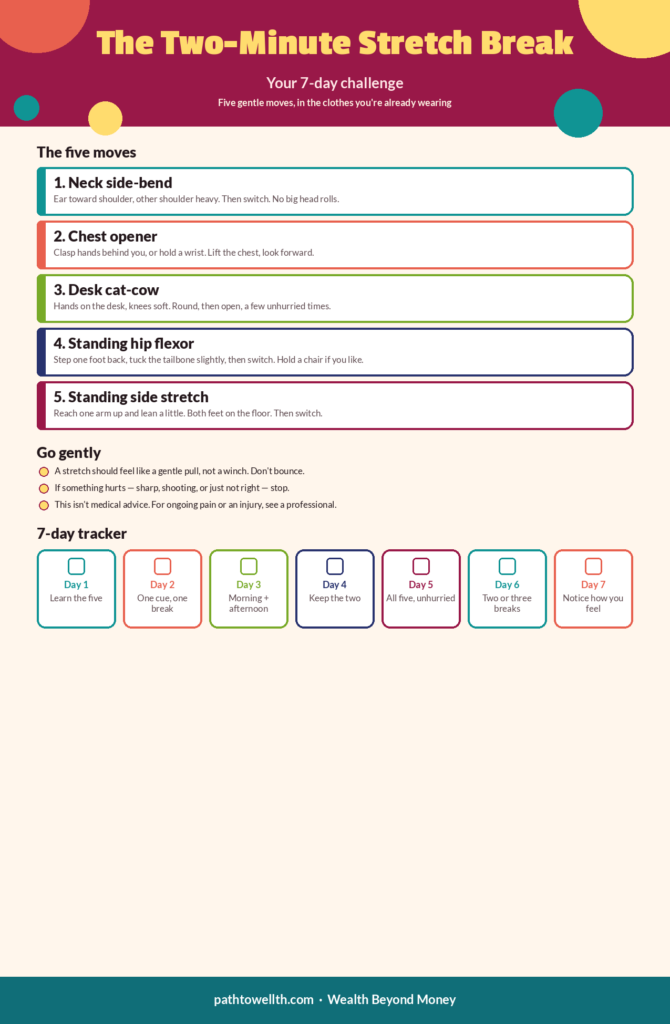
Your Stretch Break Checklist
Save it, print it, or stick it on the monitor.
Stand Up, Then Sit Down Lighter
You don’t need a new personality, a yoga mat in the office drawer, or a gym you’ll visit in theory. You need two minutes, five gentle moves, and a cue you already have.
Some days you’ll skip a break. Some days you’ll only manage the neck and the chest opener. Both count. It’s not about perfection, it’s about giving the desk hunch a few honest pauses so it doesn’t run the whole afternoon. Your future self will thank you.
So the next time the kettle clicks on, or a call ends, stand up, loosen the neck, and ask yourself: what would 3 p.m. feel like if the chair didn’t get the last word?